
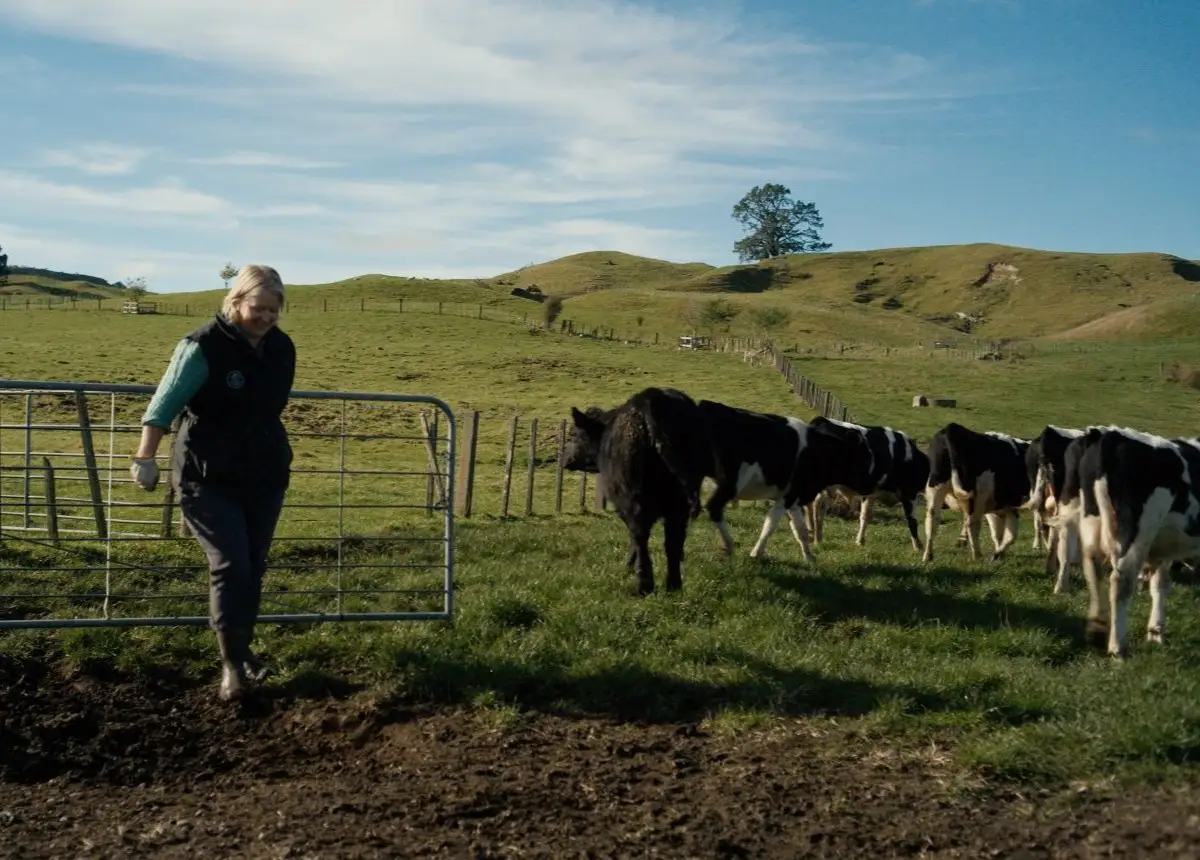
Sally and Nathan Newall run Newco Farms near Patoka in Hawke's Bay along with their three sons. Their 500-hectare operation, split across two farms, finishes around 1,000 Friesian bulls and grows winter crops including kale and chicory for animal feed.
Alongside the commercial farming business, the family is developing an on-farm learning centre featuring a wide range of animals including pigs, chickens, ducks, geese, horses, and goats.
The Newalls recently installed a solar and battery system on their farm, which has invigorated the team and offered a new sense of fulfillment and excitement for what they are doing on a daily basis.
When the sun's out and you're running your vehicles and you know that you're not using any fuel and you're out there doing your job on the farm, it's just a great feeling.
Newco Farms’ system at a glance
| Location: | Patoka, Hawke’s Bay |
| Farm type and size: | 500 Ha beef bulls and winter cropping |
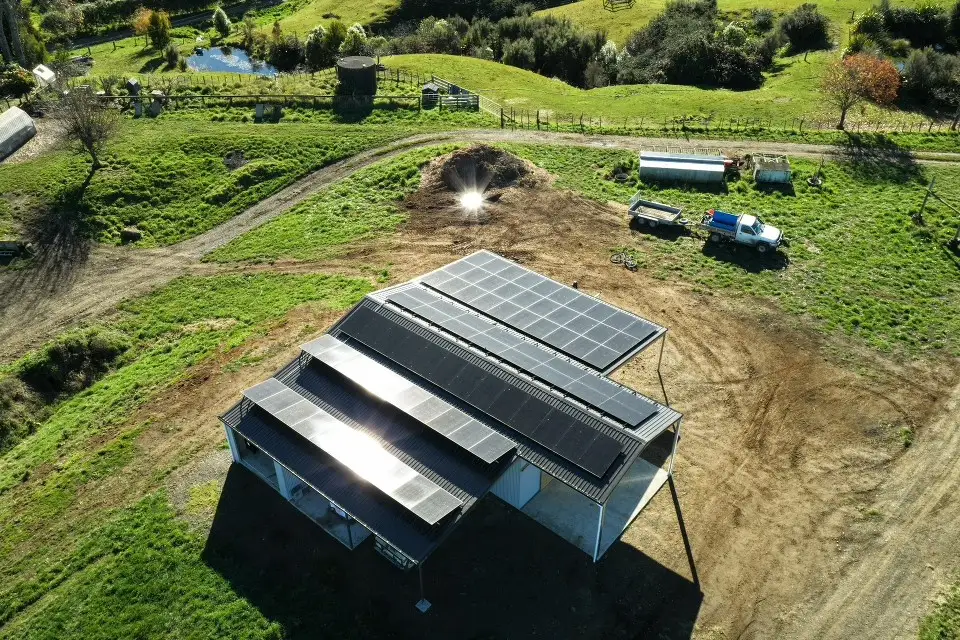
| Solar system: | 36 kWp roof-mounted solar array with 2 separate inverter, battery and gateway systems (one on each phase), totaling 48 kWh battery capacity |
| Solar investment: | $110,000 (excluding GST) |
| Annual electricity use: | ~ 35,000 kWh (based on 2025 data) |
Building resilience after Cyclone Gabrielle
The decision to invest in solar and batteries was a long time coming. The Newalls had talked about getting solar for years, but their financial situation hadn’t quite allowed it. The final decision was driven by both rising energy costs and the experience of Cyclone Gabrielle in 2023.
"We got really hammered by Cyclone Gabrielle up here, and we were without power for around five weeks," says Sally.
"For us it was about building some resilience in our farming business and being able to make sure we don't end up in that same situation again going forwards."
Support from a green loan and EECA Solar on farms demonstration funding helped make the project financially achievable.
Powering an intensive farming system
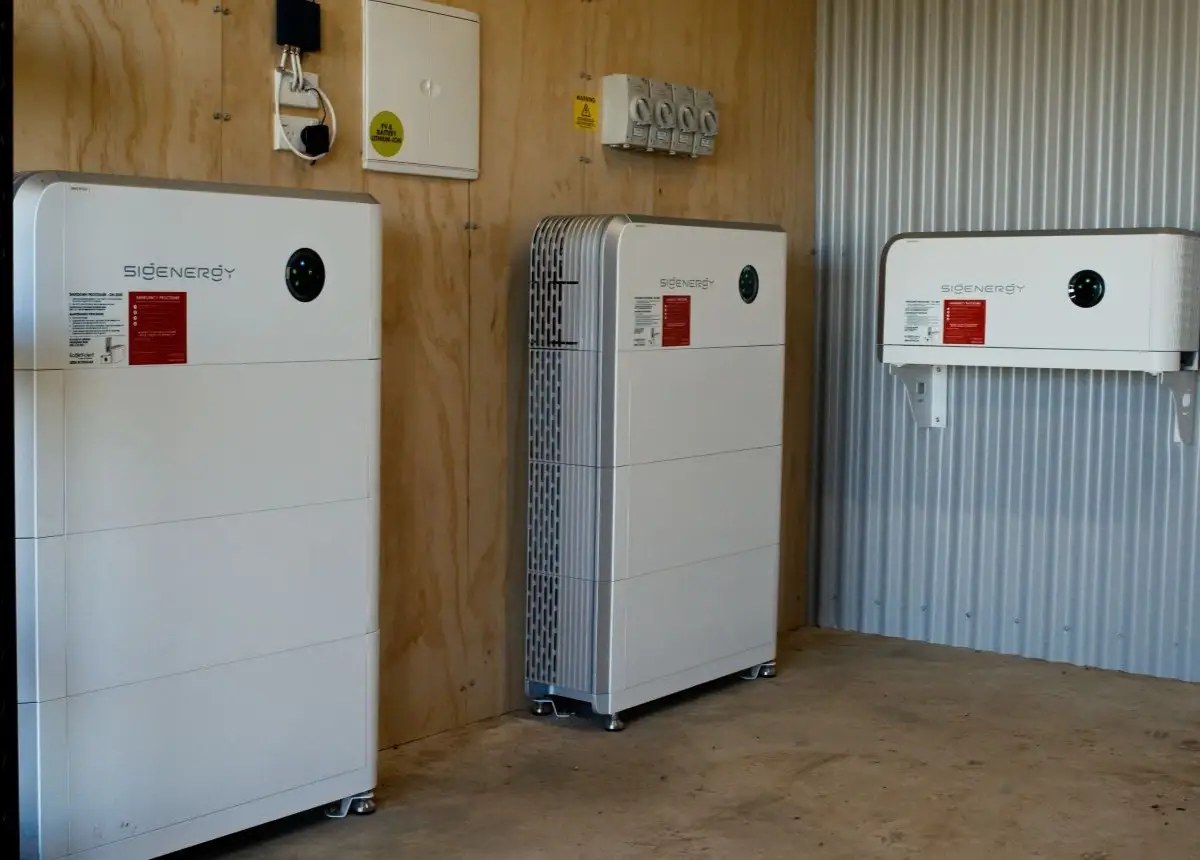
The Newalls opted for a 36 kWp roof-mounted solar array supported by two battery systems, providing a combined storage capacity of 48 kWh.
The two separate single-phase systems power the farm and the farmhouse, with surplus electricity exported to the grid. While beef farms can be perceived as relatively low electricity users, Newco Farms is different.
"Our power use is quite high compared with some beef farmers because we're commercial bull beef farmers, so it's a very intensive system," says Sally.
The farm relies on electric fencing across the entire property, with cattle managed in one-hectare cells. Water is fully reticulated, with pumps operating continuously to move water to the top of the farm from where gravity feeds it to the water troughs.
"We're drawing electricity to use our electric fences 24 hours a day, 365 days of the year."
Lessons learned about battery sizing
One of the biggest lessons from the project has been the importance of understanding how and when electricity is used across their operation and planning for future energy needs - with electric vehicles being added to their operations since the system was scoped.
In hindsight, Sally says they paid closer attention to seasonal energy use than to day-to-day consumption and may have underestimated the importance of understanding overnight electricity demand when sizing their battery system.
To further improve resilience, the family has since installed a generator connection point that can recharge the batteries and support the entire system during extended outages.
-
Batteries are modular
Batteries are sized in kilowatt-hours (kWh), which tells you how much energy they can store. Many battery systems are modular, so they can be added over time as your needs change.
Many farms add batteries after the solar system is installed. But it’s best to make the system battery-ready from the start, which may involve a hybrid inverter and pre-installed cabling to simplify future upgrades.
Adapting along the way
Like many farmers considering solar, the Newalls relied on a combination of recommendations, research, and direct conversations when selecting an installer.
"I happened to know a family member of one of the electricians… and then I also read a few reviews and realised that they were doing a big project locally. All of those things together gave me a lot of confidence."
The project encountered an unexpected hurdle when the farm's power supply was found to be configured differently from what they had assumed.
"We thought we had a three-phase power supply and it turned out to be two-phase, so we had to alter the system during installation."
As a result, the final design incorporated two separate, independent systems: one supplying the house and learning centre shed, and another supplying the woolshed, pumps, and electric fencing.
While the solar panels were installed and generating electricity within weeks, some aspects of the project took longer than expected, including three months to finalise grid-export arrangements and approvals. Despite the delays, Sally says good communication helped keep the project on track.
Changing the way they use energy
Just a few months after installation, the Newalls have already noticed significant changes in the way they use energy. They have invested in an electric motorbike for the farm, and an electric car for daily tasks and short car trips. The family has also adjusted when they use electricity around the house to make better use of their solar generation.
“We try and use more of the washing machine and dishwasher and other equipment like that during the day when the sun's out,” says Sally.
Some farm equipment has also been moved onto timers to shift energy use from overnight periods into daylight hours.
The Newalls expect to add more electric equipment — such as extra electric motorbikes — in the future, which may also mean adding more solar panels to other farm buildings.
A greater sense of control
While the Newalls are already noticing a significant drop in their electricity bills and fuel consumption, Sally says one of the biggest benefits of generating power on-farm goes beyond economics.
"Once you're generating your own power, you feel like you've got a bit of control over the situation. With everything that's happening in the world, I think that’s a big thing actually.
“I suddenly feel quite secure and quite stable and quite in control of my own destiny, which in farming is very hard to come by."
Read next
-
Growing for the future with solar
These Hawke’s Bay growers are helping manage their energy costs with a solar and battery system, building on three decades of adapting to a changing opportunity in horticulture.
- Solar energy
- Fuel switching
- Article
-
Fairbank Farms – battery-backed dairy
This Southland dairy farm’s solar and battery system is offering resilience benefits during power outages.
- Case study
- Electricity
- Fuel switching
-
From sunlight to savings
A 54 kw solar PV system is paying off for this Wairarapa dairy farm.
- Case study
- Solar energy